Become a tech leader who actually gives a damn.
A free book for engineering leaders who are tired of corporate spin and want to build teams that actually work. Punk history meets practical leadership you can use on Monday.
Engineering managers, directors, CTOs who value authenticity over hustle-culture theatre.
180+ pages · Exercises, stories, and the “band model” for teams.
Instant PDF download. No credit card. If you hate it, delete it — I won't know, and I won't spam you.
Reality check
We messed it up. All of us.
The industry promised to democratise everything. Instead we see inequity on our doorstep, elections skewed by data, and gig workers still without a safety net. None of us set out to build products that hurt people, yet the impact is real.
Inside teams? Trust wobbles, performative perfection, and leaders stuck between corporate spin and burnout playbooks. This book is a way through.
This book looks squarely at how leadership drifted — and how to pull it back.
It's written in “we” on purpose. We broke it. We get to fix it. Together.
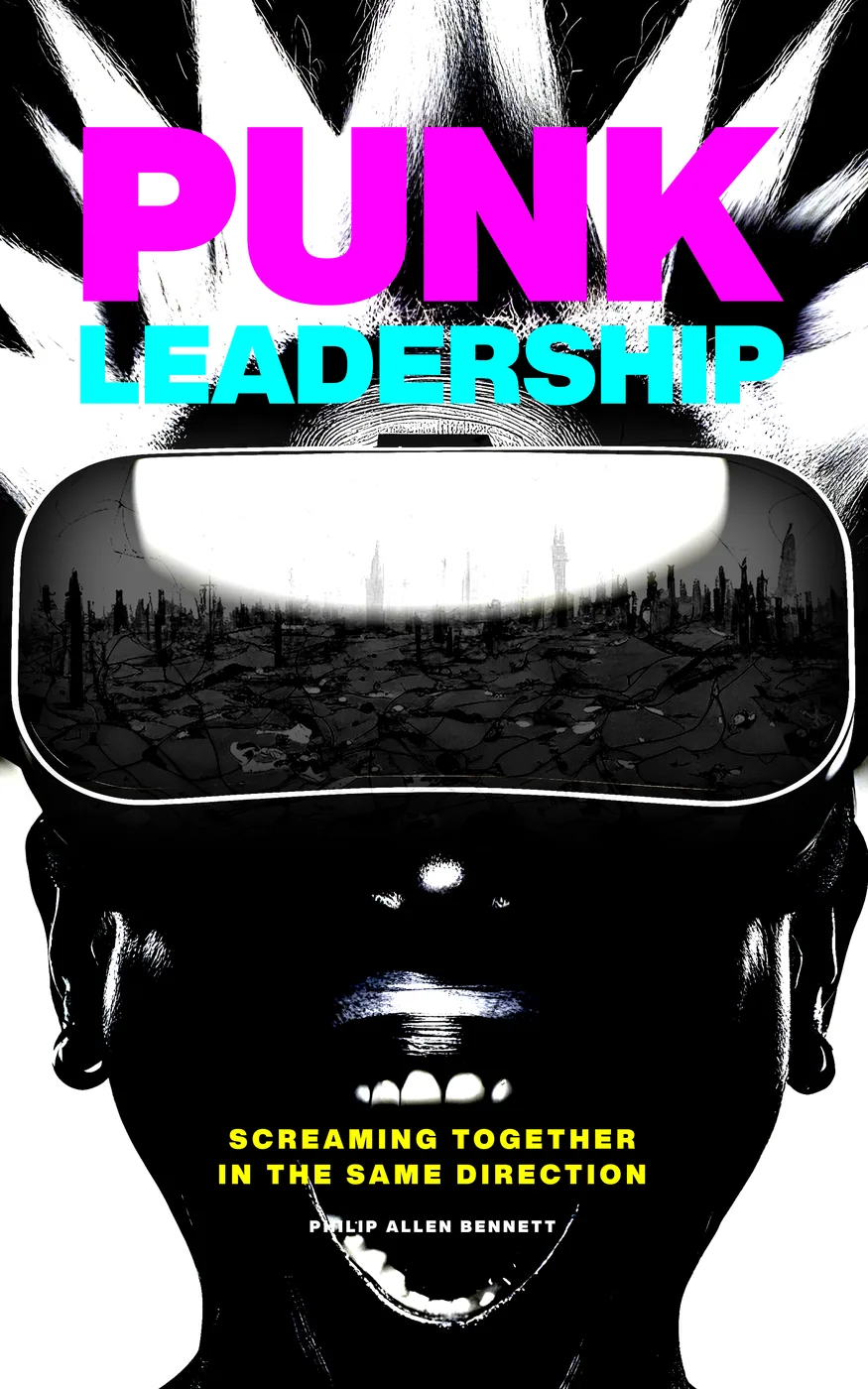
Punk Leadership
Screaming Together In The Same Direction
By Philip Allen Bennett
Email Form
Instant PDF delivery via email. No spam, just the book.
Solution
There's a better way. The punks figured it out in 1976.
Punk didn't wait for permission from record labels. They created their own scene. They cared deeply, kept things simple, and formed tight-knit bands. This book translates 50 years of that philosophy into practical leadership for engineering teams.
Build your band
Curate roles like a lineup: frontperson, lead, rhythm, bass, drums. No more “just add more engineers” chaos.
Name your cause
Name the thing you genuinely care about beyond shipping features. Purpose makes tradeoffs easier and work less hollow.
Trust by default
Trust starts at 100%. You're the one who can drop it. That unlocks speed, honesty, and ownership.
Technical minimalism
Good engineering is as little engineering as possible. Stop worshipping complexity; embrace punk DIY.
Social strength
Use Pith Scores to see who depends on whom. Build real connection instead of forced-fun offsites.
What's inside
What you'll get
Zero corporate waffle. Just the chapters, stories, and exercises that help you build teams that feel more like bands and less like bureaucracy.
Why the tech industry broke everything (and your part in it).
A choose-your-own-adventure ethics drill that may sting a little.
What The Clash and Riot Grrrl can teach you about teams—more than any MBA.
The Pith Score system for measuring social strength on your team.
Why Vivienne Westwood beats most tech CEOs as a leadership model.
End-of-chapter activities you can run this week.
About the author
Written by someone who's been in the mess.
Philip Allen Bennett spent 20+ years as a CTO and Director of Engineering at companies like Klarna and Kilo Health. He's managed teams from 5 to 50+, rebuilt systems after entire teams resigned, and seen every flavour of engineering dysfunction.
He's dyslexic, grew up in punk, and dedicated this book to the English teacher who said he was “lacking discipline” when he was just badly taught. These pages come from the trenches, not a conference stage.
Receipts
A few reasons to trust the words.
Led engineering orgs across fintech, health, and consumer.
Built teams through layoffs, hypergrowth, and full resets.
Wrote this book between real leadership crises, not MBA classes.
Social proof
What people are saying
“Grate book, with simple but powerful suggestions to spot communication problems and build trust. Fascinating parallels with the punk movement.”
Theos — April 2, 2024
“A thoughtful kind of disruption aimed at detoxifying tech. For anyone navigating leadership, this offers strategy and hope.”
Leah — April 29, 2024 (ex‑Klarna colleague)

Why now?
Lead like a punk band, not a corporation.
The punk playbook is scrappy, values-first, and allergic to empty jargon. If you want to rebuild trust, simplify systems, and get your team moving in the same direction, grab the book. It's free because we need more leaders doing the right thing, not just the profitable thing.
Free, no credit card. Instant download or email delivery. No spam, ever.
Build trust fast in a climate where misinformation erodes it daily.
Keep teams cohesive while layoffs and market swings test morale.
Choose purposeful work when people expect more than “growth at all costs.”
Lead with transparency; regulation and public scrutiny aren’t slowing down.